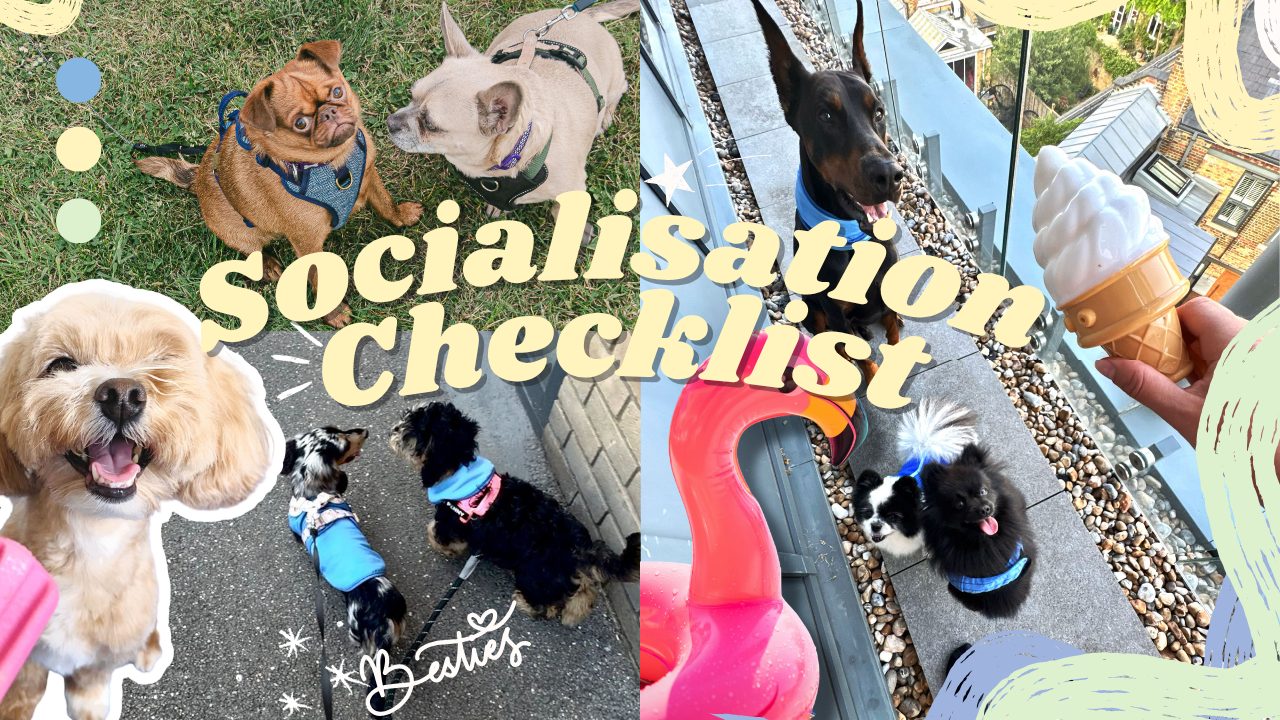
Puppy Socialisation Checklist
Learning how to socialise a puppy is one of the most important things you’ll do as a new dog owner, and one of the most misunderstood. Done well, puppy socialisation helps your dog grow into a confident, calm companion who can navigate the world with ease. Done poorly, it can lead to fears and anxieties that are difficult and expensive to undo.
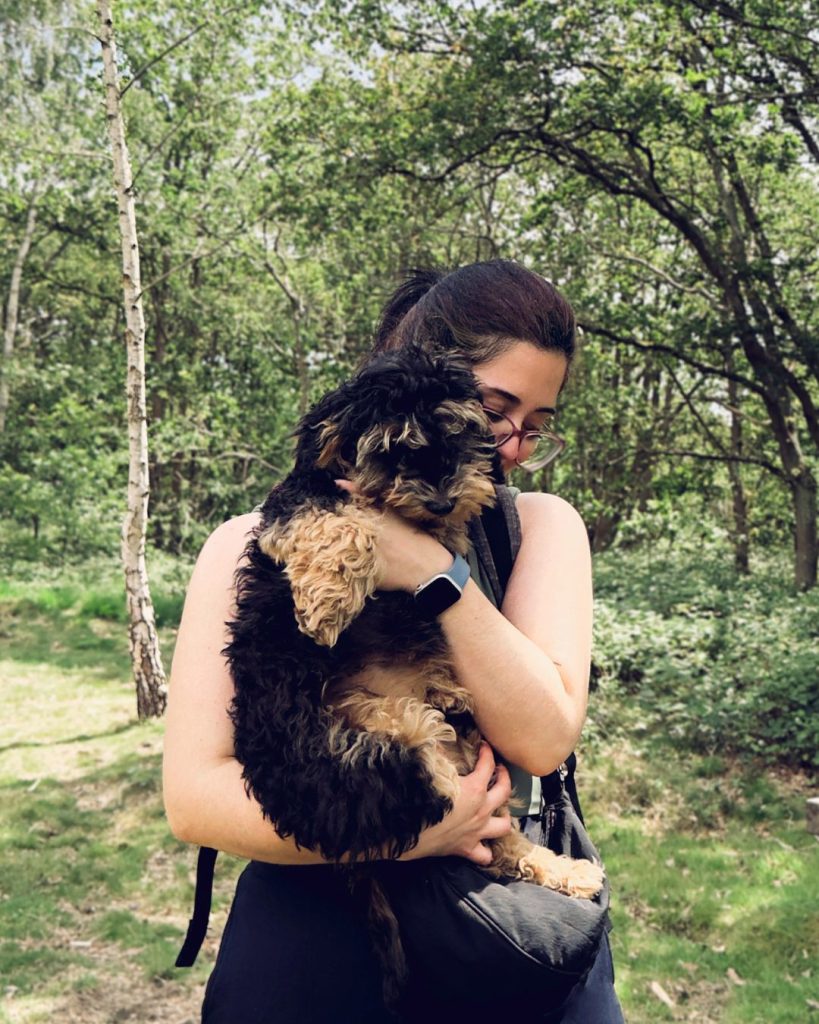
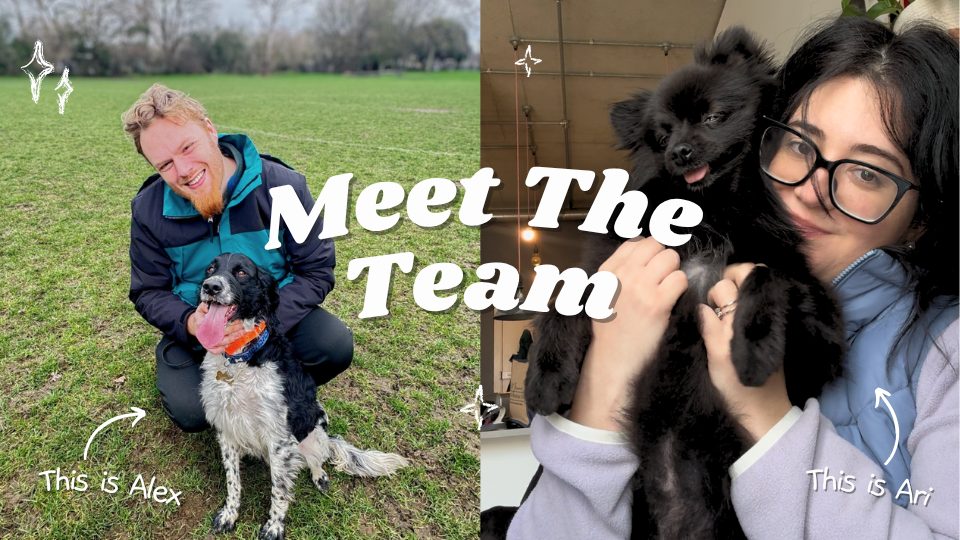
I’m Ariana, co-founder of My Wagging Tail, a dog walking and pet sitting service based in Wimbledon (SW19). I run MWT alongside my fiancé, Alex. As lifelong dog lovers, we’re passionate about providing the highest standard of care for every dog we meet. I’m certified in Animal Behaviour and Welfare by the University of Edinburgh and both of us hold a range of qualifications in canine care, first aid, dog training and behaviour. Together, we bring over 15 years of hands-on experience caring for dogs of all ages, breeds and personalities.
Over the past two years, Alex and I have been caring for dogs every day across Wimbledon, Southfields, Earlsfield, and throughout South West, West, and Central London. Working with puppies during their early months and supporting dogs of all ages has shown us just how much those first experiences influence a dog’s confidence, behaviour, and ability to navigate the world. Positive socialisation doesn’t just make life easier in puppyhood, it lays the foundation for a happier, more resilient and well-adjusted companion throughout adulthood.
That’s exactly why we created this blog post. We wanted to share the knowledge and practical experience we’ve gained from working with dogs every day, alongside evidence-based guidance on puppy development and behaviour. In this article, you’ll learn what puppy socialisation really means, when to start, which experiences your puppy should have, common mistakes to avoid, and you’ll find a practical Puppy Socialisation Checklist to help you raise a confident dog.
Whether you’ve just welcomed your first puppy or simply want to make sure you’re giving them the best possible start in life, this guide will give you the knowledge and confidence to approach socialisation in a positive, safe, and enjoyable way.
What Is Puppy Socialisation? (And What It Isn’t)
Puppy socialisation is the process of helping your puppy develop positive or neutral emotional responses to the people, animals, environments, sounds, objects and experiences they are likely to encounter throughout life. It is not simply taking your puppy to a busy park and hoping for them to make friends. That approach often backfires.
Good socialisation is about building positive associations. Every new experience should leave your puppy feeling safe, curious or rewarded – never frightened or overwhelmed. It also doesn’t mean they need to greet every dog or every person they see. In fact, calmly observing the world from a comfortable distance is often one of the most valuable skills your puppy can learn.
The Critical Socialisation Window: 3 to 14 Weeks
Between approximately three and fourteen weeks of age, puppies enter a critical socialisation period. During this time, their brains are uniquely receptive to new experiences, and whatever they encounter becomes part of their understanding of “normal.” Experiences they miss during this window can take considerably more time and training to feel comfortable with later in life.
This is why early socialisation matters so much. But it does not mean exposure to everything at once. It means gradually introducing your puppy to a variety of people, places, sounds and experiences in a way that helps them feel safe and confident, including:
- People of different ages, appearances and uniforms
- Other healthy, vaccinated dogs and animals
- Common household sounds (vacuum, doorbell, washing machine)
- Everyday London life: buses, traffic, cyclists, pushchairs, the Tube
For a complete, printable Puppy Socialisation Checklist with over 100 experiences to work through, download our free guide below.
If you’re bringing your puppy home at 8 weeks (the legal minimum age in the UK), you’ll have around six weeks left of this important developmental window. Making the most of that time can have a lasting impact on your puppy’s confidence and behaviour.
Quality Over Quantity: The #1 Mistake London Owners Make
A common misconception is that socialisation means your puppy needs to meet as many dogs and people as possible. What matters most is the quality of those interactions.
A frightening encounter with an overly boisterous dog at Wimbledon Common can do more harm than ten positive ones. Every experience should be positive, or at the very least, neutral. If your puppy is showing signs of stress (hiding, trembling, trying to escape), the situation is too much. Give them space, increase distance and try again more gradually another day.
A particularly frightening experience during the socialisation window can have a lasting impact on some puppies, which is why careful, positive introductions are so important.
Socialising a Puppy Before Vaccinations Are Complete
Many UK vets advise keeping puppies away from public areas until their full vaccination course is complete (usually around 12 to 16 weeks of age). This coincides almost exactly with the end of the critical socialisation window, which creates a real dilemma for new owners.
So the key here is for you to focus on safe, controlled exposure rather than physical contact:
- During this stage, puppies can be carried in arms or placed in a secure sling while being taken around local busy areas or nearby high streets. This allows them to observe traffic, people, sounds, and movement without direct contact with potentially contaminated surfaces.
- Social development can also be supported at home by inviting fully vaccinated, healthy dogs for brief and supervised interactions in a garden or indoor space.
- Short trips in a secure pet carrier can be used to introduce puppies to public transport such as buses or the Underground, helping them become familiar with different sounds, motion and crowds in a safe and contained way.
- Early exposure can be supported safely from a parked car near schools, cafés, or busy streets. This allows your puppy to observe everyday life while staying protected. Calm behaviour can be reinforced with rewards as they take in the world around them.
Research from the American Veterinary Society of Animal Behavior consistently shows that for most healthy puppies, the behavioural risk of under-socialisation is greater than the disease risk of careful early outings. Always discuss your specific puppy’s situation with your vet.
Puppy Socialisation Checklist: What to Introduce Your Puppy To
Ready to put our tips into practice? Download our free, printable Puppy Socialisation Checklist featuring over 100 positive experiences to help your puppy grow into a confident, well-adjusted adult dog.
How to Tell If Your Puppy Is Overwhelmed
When you notice these signs, your puppy is asking for support. Calmly increase the distance from whatever is causing discomfort and allow them time to decompress. Speak softly if it helps reassure them, but avoid encouraging or forcing them to continue.
Let your puppy decide when they feel ready to engage again. and calmly increase the distance between them and whatever is worrying them. Avoid pushing them through the experience. Dogs need to be the ones to take the first step forward when they feel ready, as this is how trust is built over time.
Your role as an owner is always to create a positive experience, even if you find yourself in a challenging situation, and staying calm is the most important thing you can do.
Recognising Discomfort in Body Language
- Yawning when not tired
- Lip licking or nose licking
- Looking away or turning the head
- Trying to hide or escape
- Tail tucked low or between the legs
- Ears flattened against the head
- Trembling, freezing or “shutting down”
- Excessive panting
What If I Have an Adult Rescue Dog?
If you’ve adopted an adult rescue dog who seems fearful, reactive, or under-socialised, it is absolutely not too late. It’s simply a different process. Adult dogs can still learn to feel safer in the world, but it requires patience, careful management, and often the support of a qualified force-free behaviourist. Avoid trainers who use “dominance,” shock collars or “flooding” techniques, as these can increase fear and damage trust. Working at your dog’s pace is the only path that produces confidence and therefore lasting results.